

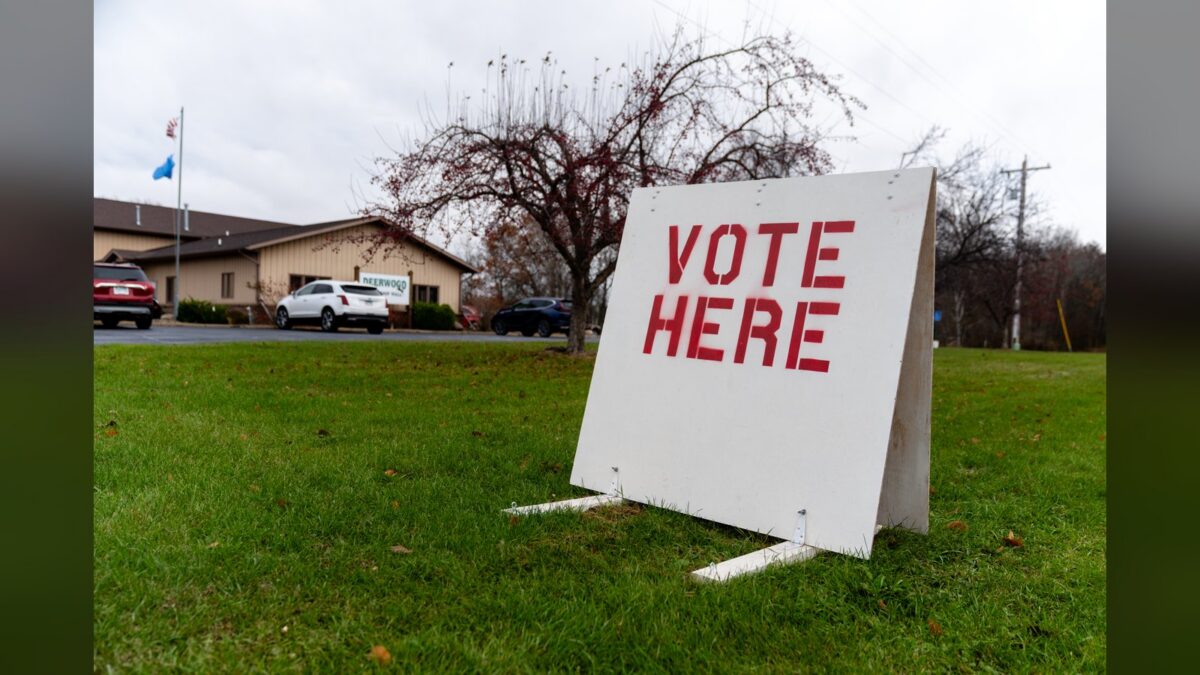
If you vote in Mecklenburg County on Election Day, Tuesday, Nov. 3, there’s a chance a U.S. Justice Department monitor will be outside your polling place. The DOJ is sending monitors to Mecklenburg, Wake and Alamance counties, the N.C. State Board of Elections told NC Newsline.
Here’s what that means for you.
The short version
- Monitors watch. They don’t run the election. They’re typically attorneys from the DOJ’s Civil Rights Division who check whether federal voting laws are being followed, according to the Campaign Legal Center, a nonpartisan watchdog group.
- They can’t be in the voting area while people are voting, according to the State Board of Elections.
- You don’t have to talk to them, voting rights lawyers say.
- This isn’t new in Mecklenburg. “They have been here every federal election since 2018,” county elections spokeswoman Kristin Mavromatis told The Charlotte Observer.
- Polls are open 6:30 a.m. to 7:30 p.m. on Election Day. If something goes wrong, call the Mecklenburg County Board of Elections at 704-336-2133.
Trump admin sending DOJ election monitors to Mecklenburg as part of national effort https://t.co/jbt35wSN1q
— The Charlotte Observer (@theobserver) October 28, 2026
What monitors can do
The DOJ plans to send about 1,000 monitors to all 50 states, the largest monitoring effort it has ever run, The Associated Press reported. The department didn’t tell the Mecklenburg board which polling places its monitors will visit, Mavromatis told the Observer. The State Board hasn’t been told how many are coming, a spokesperson told The News & Observer.
Tim Hoegemeyer, the State Board’s general counsel, laid out the rules in an email to the DOJ’s voting rights staff that NC Newsline obtained. Under state law and election rules, he wrote, monitors may:
- Go into polling places on Election Day morning, before voting starts, to watch poll workers set up.
- Be inside after the polls close at night.
- Approach people outside the buffer zone, before or after they vote, to ask about their experience.
- Contact political parties to ask for interviews with the parties’ poll observers.
USDOJ election monitors will be in Wake, Alamance, and Mecklenburg counties on Election Day, according to the NC Board of Elections. The DOJ had announced it would send monitors to every state as part of the largest monitoring effort in history. #ncpol https://t.co/lnzuylfdOZ
— @lauraleslieNC25 (@lauraleslienc25) October 28, 2026
What they can’t do
Monitors aren’t allowed in the voting enclosure while voting is going on, Hoegemeyer reminded county election staff. “They would be just like any other member of the public,” he told the N&O.
Election monitors aren’t law enforcement officers, the Observer reported, citing CNN. The DOJ has said FBI and ICE agents won’t serve as monitors, according to the N&O. A senior DOJ official also told PBS News that monitors won’t be sent to early-voting sites and are “not out there checking citizenship status.”
Federal and state law bar monitors, like anyone else, from intimidating, threatening or coercing voters or anyone helping a voter, according to the Campaign Legal Center’s North Carolina factsheet. The group says monitors also can’t give orders to poll workers, try to influence how people vote, or enforce state or local law.
Trump administration to send DOJ monitors to three NC counties on Election Day https://t.co/HdtJoduqZb
— The News & Observer (@newsobserver) October 29, 2026
Do I have to talk to them?
No. If a monitor approaches you, you don’t have to answer their questions, Jeff Loperfido, chief counsel for voting rights at the Southern Coalition for Social Justice, told NC Newsline. “Once the voting act is over, it’s no different from people who do exit polling for candidates,” he said.
Brooks Fuller, policy director for the voting rights group Common Cause, gave the same reminder in the N&O.
Is this new?
No. The Campaign Legal Center calls DOJ election monitoring “a decades-old effort” for federal elections. What’s different this year is the size. In 2022, the DOJ sent monitors to 64 jurisdictions in 24 states, Stateline reported. A DOJ official told PBS News the department sent 388 people that year.
Why some people are uneasy
The expanded program has made Democrats, some Republicans and voting rights advocates wary because it comes as President Donald Trump tries to influence elections, NC Newsline reported. The NAACP has sued the DOJ for records about the program, according to Stateline.
The Campaign Legal Center says the DOJ has recruited beyond its usual pool of civil rights attorneys to reach 1,000 monitors. After Wyoming’s August primary, that state’s Republican governor called two monitors’ behavior “a bit aggressive” and “irregular,” the Observer reported, citing the AP.
Fuller told the N&O he isn’t worried about career DOJ staff, but advocates are concerned by a court filing suggesting staff from other federal agencies could serve as monitors. He added that “right now in North Carolina, we’re seeing no red flags.”
The DOJ says monitors only watch. “Our monitors only observe. They do not intrude or interfere in any way in the voting process,” a DOJ official wrote to county election officials, according to the N&O. “Every monitor will merely observe and report any potential violations of federal law to the Department,” DOJ spokesperson Kiersten Pels told Stateline.
On X, a post sharing NC Newsline’s headline had about 200 likes by Thursday afternoon. Some replies cheered the monitors; others asked why their own counties weren’t on the list.
US Justice Department to send election monitors to these NC counties
📍 North Carolina— Jennifer Asper (@j3669) October 29, 2026
If something goes wrong at your polling place
- Tell a poll worker first. The election officials at each polling place are responsible for keeping order, and they can remove people who intimidate or delay voters, according to the Campaign Legal Center.
- Mecklenburg County Board of Elections: 704-336-2133, according to the county board’s website.
- N.C. State Board of Elections: (919) 814-0700 or elections.sboe@ncsbe.gov, according to the State Board’s contact page.
- Election Protection hotline: Call or text 866-OUR-VOTE (866-687-8683) to reach a trained volunteer with the nonpartisan coalition. A Spanish-language line is at 888-VE-Y-VOTA (888-839-8682), according to the Campaign Legal Center.
Still need to vote? Early voting ends at 3 p.m. Saturday, Oct. 31, according to the State Board, and any county site works, from Park Expo to the site near UNC Charlotte. On Election Day, polls are open from 6:30 a.m. to 7:30 p.m., and you vote at your assigned polling place. Anyone in line at 7:30 p.m. can still vote, according to the State Board. See our Election Day guide for Mecklenburg voters.